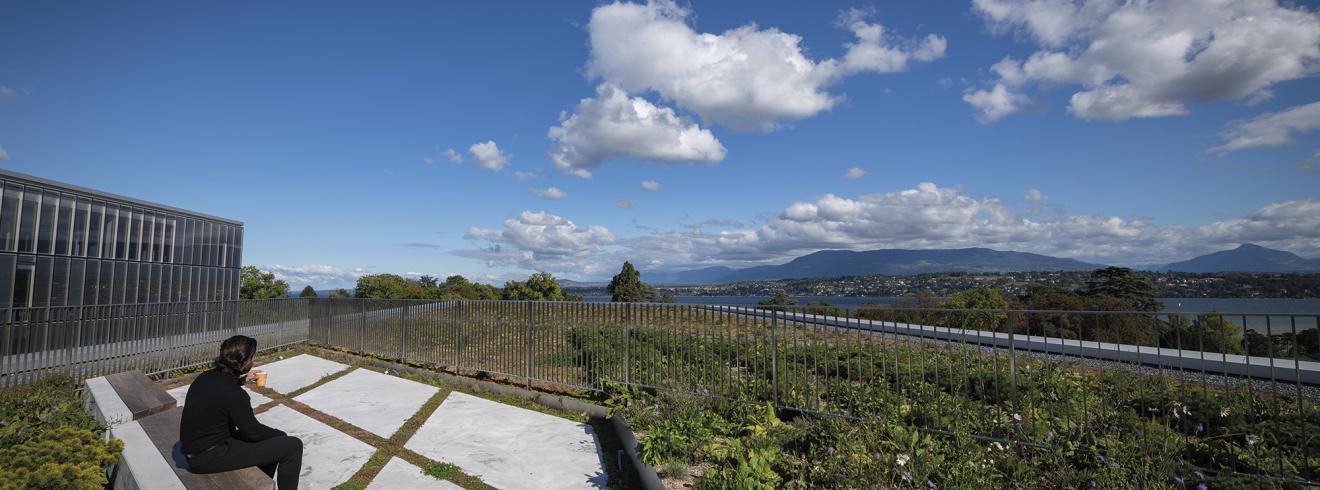
The United Nations Office at Geneva (UNOG) is actively improving waste management in the context of a comprehensive Environmental Management system (EMS). The Sustainable UN (SUN) team of UNEP guided an internal audit on waste samples.
Why Waste Sorting?
Efforts across the UN system entities contribute to the accomplishment of the Phase I of the UN Sustainability Strategy (2020–2030) and the commitment to reducing the environmental footprint of UN facilities and operations.
Poor waste handling can contribute to pollution, resource depletion, greenhouse gas emissions and overall slowdown the achievement of Agenda 2030, particularly SDG 12: Responsible Consumption and Production.
UNOG, in collaboration with the UNEP SUN team organized an audit and waste sampling in their premises. The audit results support a better understanding of the management of solid waste and the entity’s efforts towards a continuous improvement of their environmental management.
The audit piloted the waste sampling methodology for mixed and separated materials established by Åsa Elisabeth Tynell (UNEP SUN) and Amita Bäcker (Sweco). These samplings enable a better understanding of the waste composition, as well as the identification of actionable steps for improvements in waste flows on an annual basis. Earlier in 2024 a similar pilot took place in Kazakhstan’s UN office. The UNOG pilot relied on early lessons learned yet adapted the audit to local needs and conditions.
Methodology
The audit team, led by Asa Elisabeth Tynell (SUN) and Adam Ostaszewski (IOM) followed the steps in the Greening the Blue internal audit guidance, setting an audit plan and scope. The auditees included UNOG personnel Chloe Brown and Henrik Distel (UNOG Central Support Services), Thierry Decroux (UNOG Facility Management Service) together with cleaning and waste service providers. Observers from ITU, OHCHR and WIPO contributed to the process. The audit criteria were elaborated based on policy documents of the UN, waste regulations of the region and the city of Geneva and the 2050Today Charter.
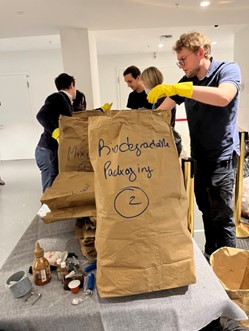
The audit included:
- Site Visits: A thorough inspection of a facility at the Palais des Nations to observe waste management practices and infrastructure.
- Interviews: Discussions with the facilities management team, cleaning personnel, and waste service providers to gain insights into processes and challenges.
- Document Review: Evaluation of policies, contracts, and waste data collection procedures.
- Waste Sampling and Analysis: Hands-on analysis of mixed and separated waste streams to identify patterns and areas for improvement.
Audit findings
The internal audit in the inspected facility at UNOG provided a comprehensive assessment of waste management practices, highlighting positive findings, areas for improvement and areas that need corrective actions.
Examples of good practices were identified:
- Clearly labeled waste bins on each floor to facilitate proper waste separation were noted
- UNOG has a billing system that calculates charges based on the weight of waste generated, incentivizing efforts to minimize waste.
- The audit observed effective separation of key waste streams, including glass, aluminum, PET, and paper/cardboard.
- UNOG’s elimination of individual desk bins, promoting centralized collection.
- Use of hand dryers in restrooms reduced the need for paper towels, minimizing waste generation.
- UNOG encouraged staff to bring reusable cups for coffee machines, reducing single-use waste.
- The Grab’n’Go café’s reusable glass containers for food and beverages, reducing reliance on disposable packaging.
The internal audit also identified non-conformities, such as improper disposal of batteries and e-waste due to a lack of recipients for hazardous waste, and the lack of organic waste separation, which is required by local Geneva regulations. Opportunities for improvement included better separation of PET, enforcement of waste data collection, better labelling of waste containers and the installation of drinking fountains to reduce the consumption of bottled water.
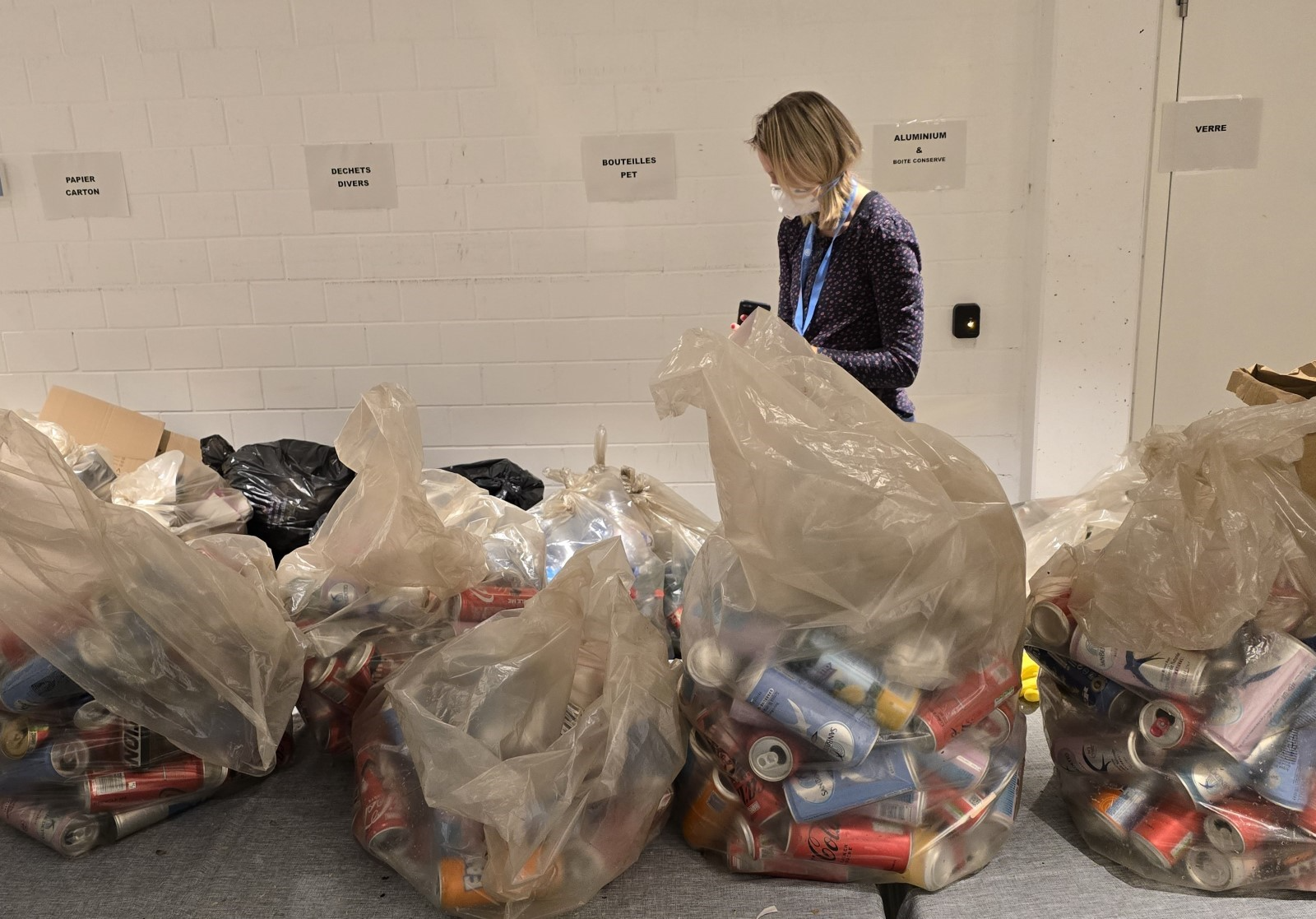
The implementation phase provided important insights into how waste sampling, stakeholder interviews and site assessments can be combined to identify gaps and good practices. For example, interviews with cleaning staff and waste management companies revealed procedural inefficiencies, such as the overuse of plastic bags and inconsistencies in certain recycling practices.
UNOG is using the audit findings to update its environmental action plan and promote targeted measures to improve compliance, reduce environmental impacts and strengthen a culture of sustainability at the Palais des Nations. This approach underscores the importance of tailored solutions that align local needs with global sustainability goals.
Lessons Learned and Next Steps
The internal audit on waste underscored the importance of context-specific solutions. While certain practices can be replicated across UN facilities, local regulations, infrastructure and different usage significantly influence waste management strategies. The findings highlight the need for continuous collaboration between focal points, facilities managers, and service providers.
The audit results will guide future initiatives, with follow-up actions to address identified non-conformities and refine waste management practices further. These efforts demonstrate a scalable model that balances local needs with global sustainability goals under the Greening the Blue initiative.
For any more info, please visit: https://www.ungeneva.org/en/about/palais-des-nations/environment
Article written by Mats Krüger and Ilektra Papadaki from UNEP based on input and interviews with Henrik Distel (UNOG), Chloe Brown (UNOG) and Asa Elisabeth Tynell.
Quicklinks
Related News

Plastic waste is polluting our rivers, oceans and landscapes. It is threatening wildlife and entering our food chain. From the deepest of the oceans to the top of Mount Everest, plastic is found in every corner of the planet. And our…

WFP Ethiopia’s country office enacted an ambitious waste management scheme based on careful planning and negotiation. In 2023 WFP recycled 326,672 Kg of waste, generating a revenue of 60.000 USD. In 2024 WFP recycled a total of…

UNIDO provides a plastic free environment in the catering facilities at the Vienna International Center.