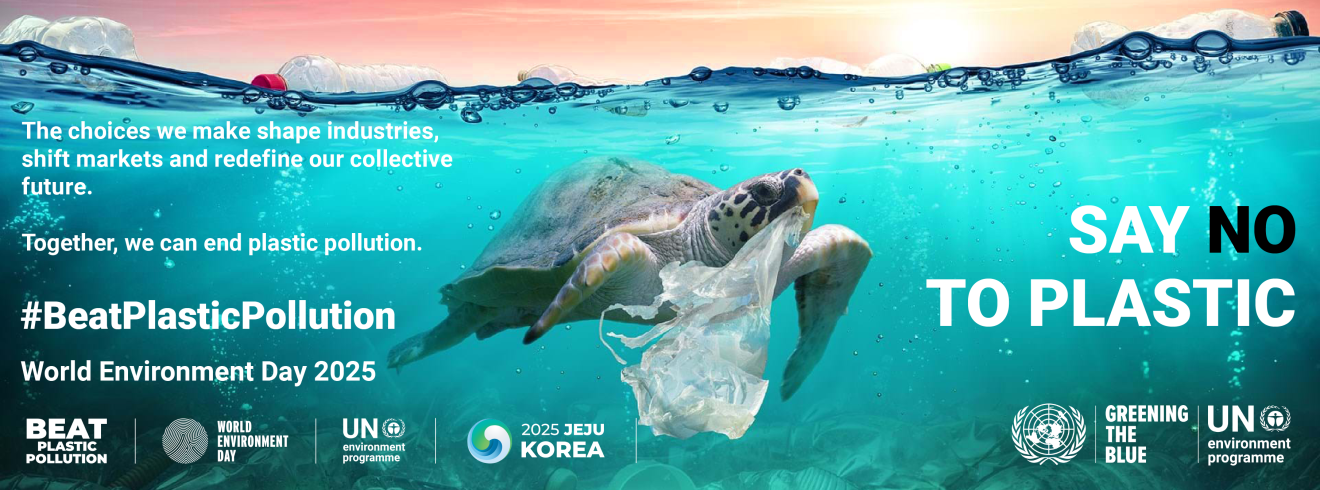
Plastic waste is polluting our rivers, oceans and landscapes. It is threatening wildlife and entering our food chain. From the deepest of the ocean to Mount Everest, plastic is found in every corner of the planet. And our bodies.
This year, World Environment Day calls on all of us to take action under the theme #BeatPlasticPollution.
A Unique Chance for Global Action
In 2022, countries agreed to start working on an international legally binding treaty to end plastic pollution. Since then, they have met five times to shape the future agreement. The next and final part, known as INC-5.2, will take place in Geneva, Switzerland, from 5 to 14 August 2025.
This is a key moment. Countries have the chance to agree on a global plan that could reduce plastic pollution for good. The decisions made in Geneva could change how we produce, use and manage plastic for generations to come.
The Impact of Plastic Pollution Today
- Global plastic use is expected to reach 516 million tonnes in 2025.
- By 2060, annual use will double to 1,2 billion tonnes.
- 11 million tonnes of plastic enter aquatic ecosystems annually.
- 13 million tonnes accumulate and contaminate soil annually.
- Plastics breaks into tiny particles, called microplastics, which have been found in human arteries, lungs and even breast milk. Research shows they are responsible for serious illnesses, as cancers and dementia.
Recycle fails to solve this issue.
Only 9% of plastic is recycled globally.
Only 21% is considered economically recyclable, meaning the costs to separate, collect, treat and recycle can be covered.
Rethinking Plastic use
To tackle plastic pollution, we must rethink how we use plastic.
A circular economy, where plastic is reused or recycled rather than thrown away, could reduce ocean plastic by over 80%, cut greenhouse gas emissions by 25% and save governments 70 billion US dollars by 2040. And circularity, does not only mean recycling, but also refusing and reducing by design.
Many countries are already taking action:
- In France, companies must cover the cost of dealing with their packaging waste.
- In Kenya, producers are legally responsible for plastic waste they create.
- In Canada, a reusable container program helps reduce single-use plastics from takeaway food.
World Environment Day 2025 is a reminder that we all have a role to play. From governments and businesses to communities and individuals, everyone can help #BeatPlasticPollution.
The upcoming negotiations in Geneva offer a rare chance to make real progress. With bold decisions and global cooperation, a cleaner, healthier future is within reach.
Resources:
WED 2025 website (multilingual)
Event registration (multilingual)
Campaign brief (multilingual)
Quicklinks
Related News

The United Nations Office at Geneva (UNOG) is actively improving waste management in the context of a comprehensive Environmental Management system (EMS). The Sustainable UN (SUN) team of UNEP guided an internal audit on waste samples…

WFP Ethiopia’s country office enacted an ambitious waste management scheme based on careful planning and negotiation. In 2023 WFP recycled 326,672 Kg of waste, generating a revenue of 60.000 USD. In 2024 WFP recycled a total of…

UNIDO provides a plastic free environment in the catering facilities at the Vienna International Center.