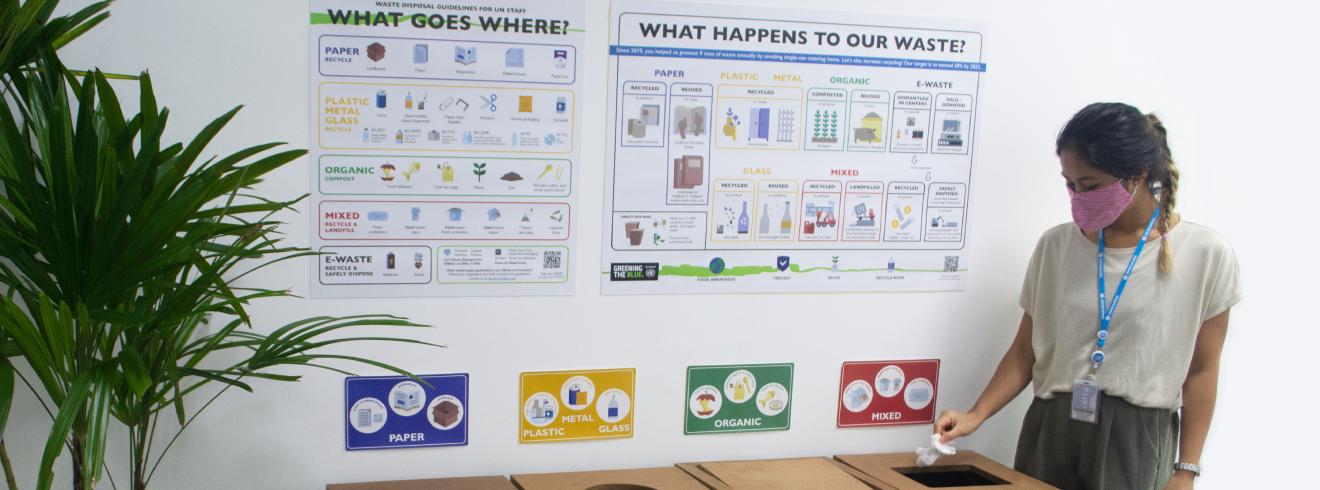
The ESCAP Waste Management Strategy has managed to reach 71% waste recycling in 2020, starting from 24% back in 2017 (baseline year). ESCAP has covered the entire waste generation and management cycle to ensure this result (what is generated, why (prevention), how it is segregated (recycling bins), how it is sorted (new waste sorting station), how to recycle more (market research to find more recyclers for waste which allowed ESCAP to reach 71%), and awareness campaigns (videos, flyers, etc.,) involving senior management, staff, and contractors as champions/actors). As a priority, ESCAP strives to support social initiatives that support local communities through recycled waste.
Learn more about ESCAP's commitment to managing their waste here.
Quicklinks
Related News

The United Nations Office at Geneva (UNOG) is actively improving waste management in the context of a comprehensive Environmental Management system (EMS). The Sustainable UN (SUN) team of UNEP guided an internal audit on waste samples…

Plastic waste is polluting our rivers, oceans and landscapes. It is threatening wildlife and entering our food chain. From the deepest of the oceans to the top of Mount Everest, plastic is found in every corner of the planet. And our…

WFP Ethiopia’s country office enacted an ambitious waste management scheme based on careful planning and negotiation. In 2023 WFP recycled 326,672 Kg of waste, generating a revenue of 60.000 USD. In 2024 WFP recycled a total of…